Does standardizing production lower quality?
For a craft workshop, standardizing production does not mean reducing the value of the product, but better control over the variables that affect quality, timing and margins.
Today bakeries, pastry shops and pizzerias work in an increasingly complex environment: rising raw material costs, energy consumption to be monitored, difficulties in finding qualified staff and the need to ensure consistent results…
The point is not to replace artisan expertise with automation, but to flank it with tools capable of accurately replicating the correct processing parameters. Modern artisan bakery machinery makes it possible to increase volumes while maintaining stable quality, without changing recipes, dough structure or identity of the finished product.
Efficiency and waste reduction
The profitability of a laboratory depends not only on the selling price, but also on the ability to reduce errors, waste, rework and unproductive time.
Reducing laboratory waste starts with process repeatability. Each dough must be able to be managed according to stable parameters, especially with high hydrations, long fermentations or large leavening.
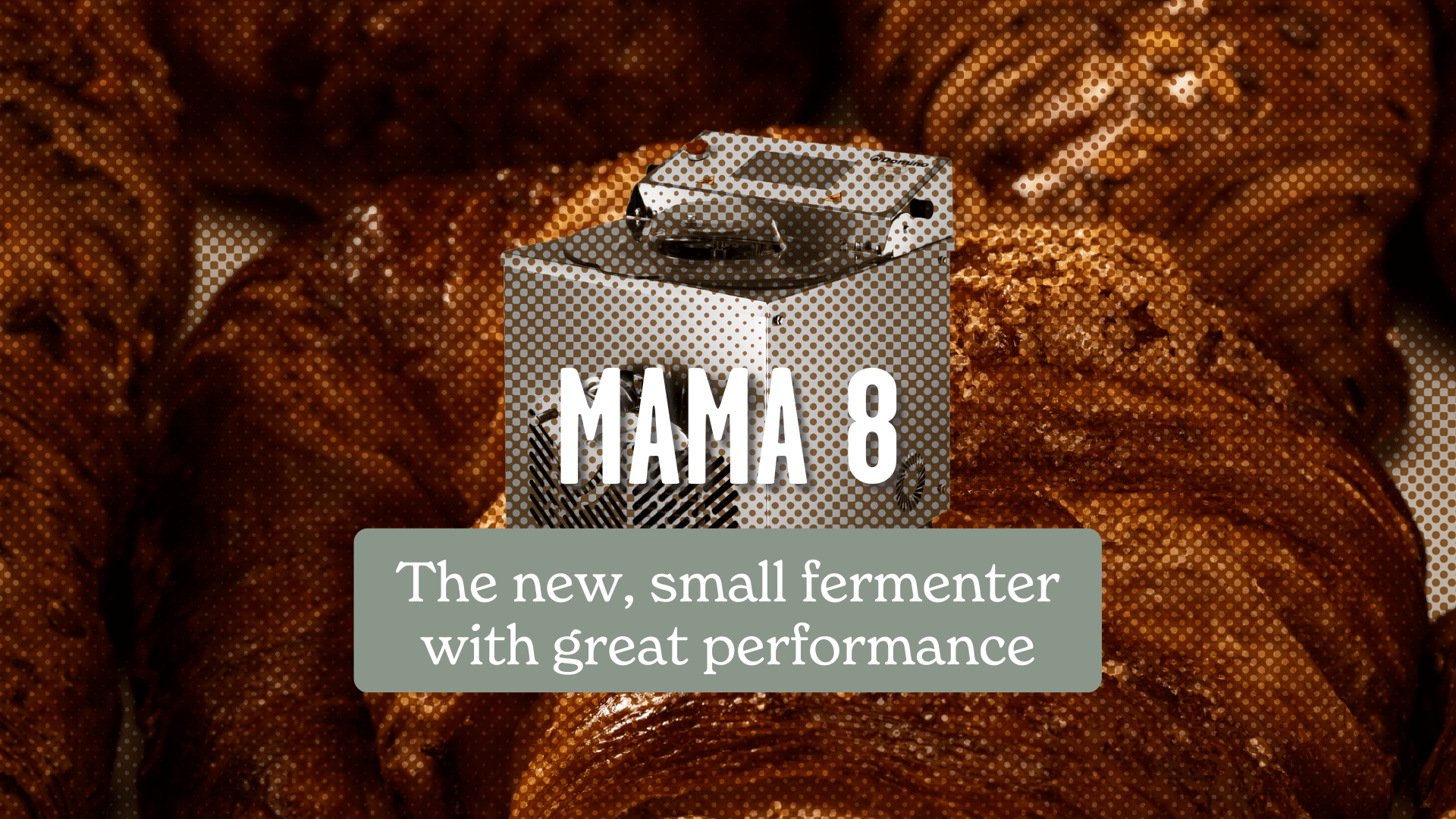
High-precision, high-tech machinery such as the TUFF EVO plunger arm kneaders or the MAMA liquid yeast generator can be the real game changer in your laboratory:
- Greater consistency of food cost;
- Reduction of scrap and rework;
- Better performance of raw materials;
- Optimization of production time;
- Lower incidence of extraordinary maintenance;
- consumption commensurate with productivity.
Domino machines do not intervene in the recipe, but in the precision of its execution.
MAMA and the control of living costs
Natural yeast management is a technically delicate and, at the same time, economically relevant step. Temperature errors, incorrect timing or fermentation imbalances can compromise quality, production continuity and shelf-life.
MAMA, a liquid natural yeast fermenter, allows for precise control of the fermentation, maturation and storage phases. The laboratory can thus have a more stable, viable and ready-to-use yeast.
The impact on living costs is concrete:
- Less use of compressed yeast;
- Reduction or elimination of improvers and preservatives when the process allows;
- Increased shelf-life of the finished product;
- reduction of unsold inventory;
- Better production planning.
Added to these aspects is a commercial advantage: production with stable natural yeast and a cleaner ingredient list allows clean label products to be enhanced, positioning them at a higher end of the market.
TUFF EVO: “like handmade,” but on a large scale
The main fear associated with standardization is losing the delicacy of artisanal processing. This is a real risk, especially with sensitive doughs: high hydrations, large leavened doughs, flatbreads, long-maturing pizzas, and high-fat products.
Kneaders with plunging arms meet this very need. Their movement accompanies the dough without forcing it, promoting gradual incorporation of ingredients and better oxygenation.
TUFF EVO allows processing larger quantities while maintaining:
- Respect for the glutinic mesh;
- Dough temperature control;
- Regular development of the structure;
- More homogeneous alveolation;
- Greater fluffiness of the finished product.
Standardization does not make the product impersonal, but makes the desired result replicable.
Standardize production without sacrificing craftsmanship identity
Standardizing bakery production does not mean industrializing the product, but better controlling the process: it means reducing waste, optimizing costs and ensuring quality continuity without sacrificing artisan identity.
TUFF EVO enables precise and gentle dough processing. MAMA allows stable management of liquid natural yeast, reducing the use of compressed yeast, additives and improvers.