Great leavened goods are symbols of the Italian ”arte bianca” and tradition, the undisputed protagonists of festive tables and high-quality pastries. Panettone, pandoro, colomba: names that evoke unmistakable flavors, enveloping fragrances and craftsmanship that requires dedication, expertise and proper tools. These sweets are not only a treat for the palate, but also a cultural expression and a ritual that accompanies the most important times of the year, such as Christmas and Easter.
Making great leavened goods is a challenge that requires a perfect combination of technique and passion. Their production process is complex and characterized by long leavening times, which require absolute precision to ensure the balance between softness, flavor and fragrance. It is an art that, while being deeply rooted in tradition, is constantly evolving through technological innovation, offering experienced bakers and pastry chefs tools that can make each step more efficient and safe.
During the holiday season, these sweets become true protagonists: panettone on Christmas tables, pandoro as a symbol of the winter holidays, and colomba to celebrate Easter. Each product represents a unique connection to the local region and cultural habits, embodying the Italian pastry tradition in a perfect balance between simplicity and complexity.
Origins and tradition of great leavened goods
The roots of great leavened goods are deeply rooted in history. Panettone, for example, has medieval origins and is associated with Milan, where it was initially prepared as bread enriched with precious ingredients such as raisins and candied fruit, a symbol of prosperity. The most famous legend tells of Toni, a humble baker in the service of the Sforza family, who mistakenly created an incredibly soft and fragrant cake: thus the “Pan di Toni” was born. Over time, panettone has evolved through the creativity of master pastry chefs to become the iconic dessert we know today.
Pandoro, on the other hand, has roots in Renaissance Verona, with ties to “nadalin”, a local star-shaped cake. Pandoro, in its modern version, was patented by Domenico Melegatti in 1894, combining rich butter-based dough and a slow leavening process that gives it its characteristic softness and unmistakable star-shaped pyramidal form. Its elegance and delicate flavor make it a must-have winter holiday classic.
The Easter dove has a more recent history than its Christmas “siblings,” but it is just as rich in symbolic meaning. It is said that its shape, evocative of peace, was introduced in the 1930s by a well-known confectionery company in Lombardy to create a cake reminiscent of panettone, but specific to Easter. The recipe calls for a dough enriched with candied fruit and a crunchy almond glaze, making colomba a unique dessert in the panorama of Italian traditions.
In all of these preparations, the common denominator is the use of sourdough and a meticulous manufacturing process. Great leavened goods are not simply cakes, but true works of art that require mastery and precision to bring out their organoleptic and structural peculiarities.
The peculiarities of sourdough
Great leavened goods owe their uniqueness to the organoleptic and structural characteristics imparted by natural leavening. Using natural yeast, such as MamaLiev, results in a product that is distinguished by:
- Complex and intense aromas: thanks to natural fermentation, rich and varied scents develop that enhance every bite.
- Soft texture and perfect alveolation: the slow rising process results in a light and homogeneous texture.
- High digestibility: the microorganisms in natural yeast predigest some of the sugars and proteins, making the product more easily digestible.
- Durability and freshness: thanks to the natural preservative properties of natural yeast, great leavened goods retain softness and flavor longer without the need for additives.
These elements make panettone, pandoro and colomba considered true masterpieces of taste and craftsmanship. However, their production requires attention, precision and tools capable of supporting the artisan in every step of the process.
MAMA: the heart of sourdough
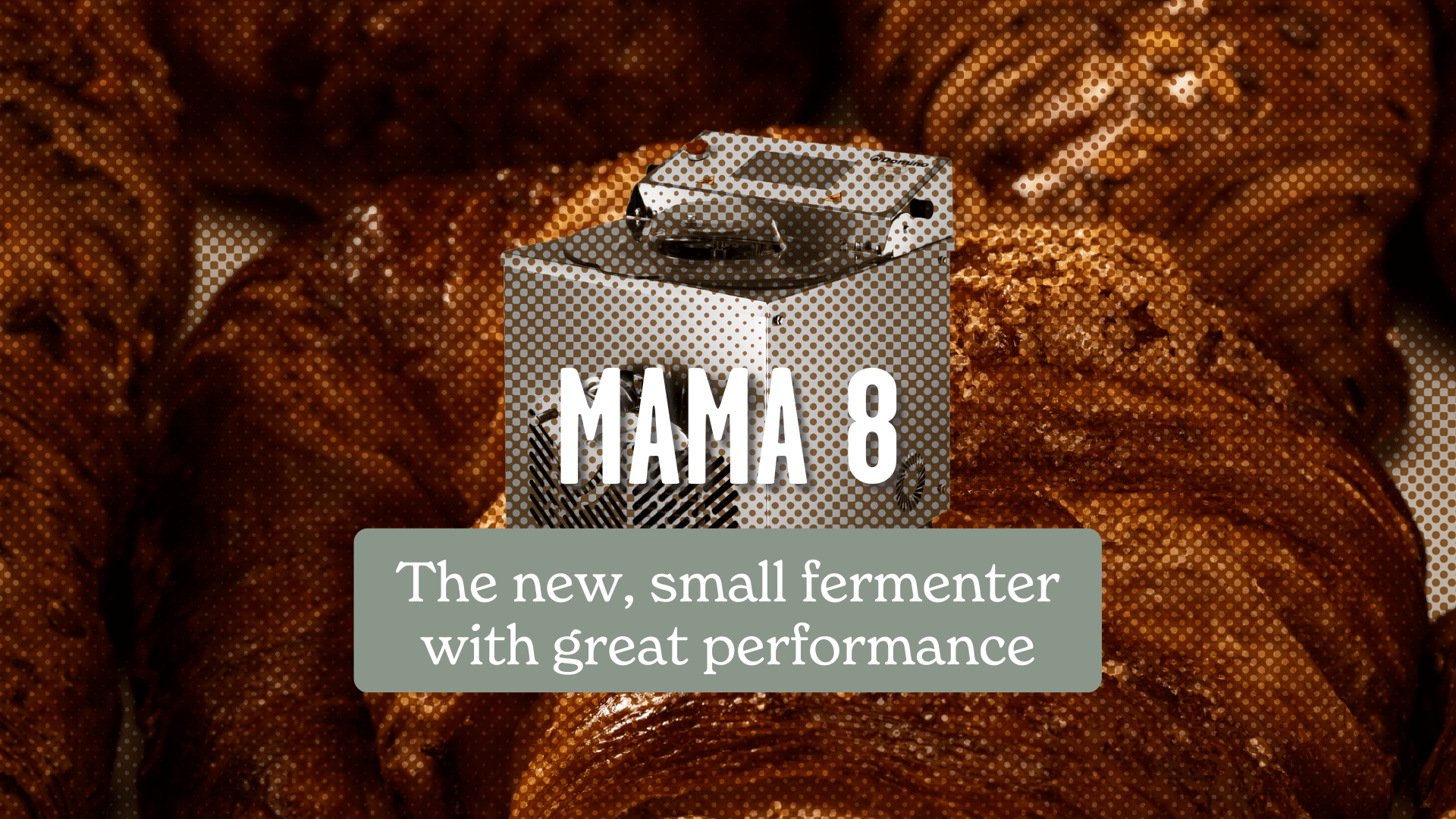
Managing a natural yeast requires time, experience and consistency. For this reason, technology has developed solutions such as MAMA, a machine designed to ensure optimal management of sourdough.
With MAMA, it is possible to keep the temperature and acidity of natural yeast under control at all times, eliminating the risk of errors. This allows artisans to focus on product quality, knowing they can count on a stable, high-performing yeast. In addition, the possibility of plucking directly from the machine facilitates daily operations, making MAMA an indispensable tool for those who want to achieve excellence in the production of great yeast products.

Fermenter for liquid natural yeast
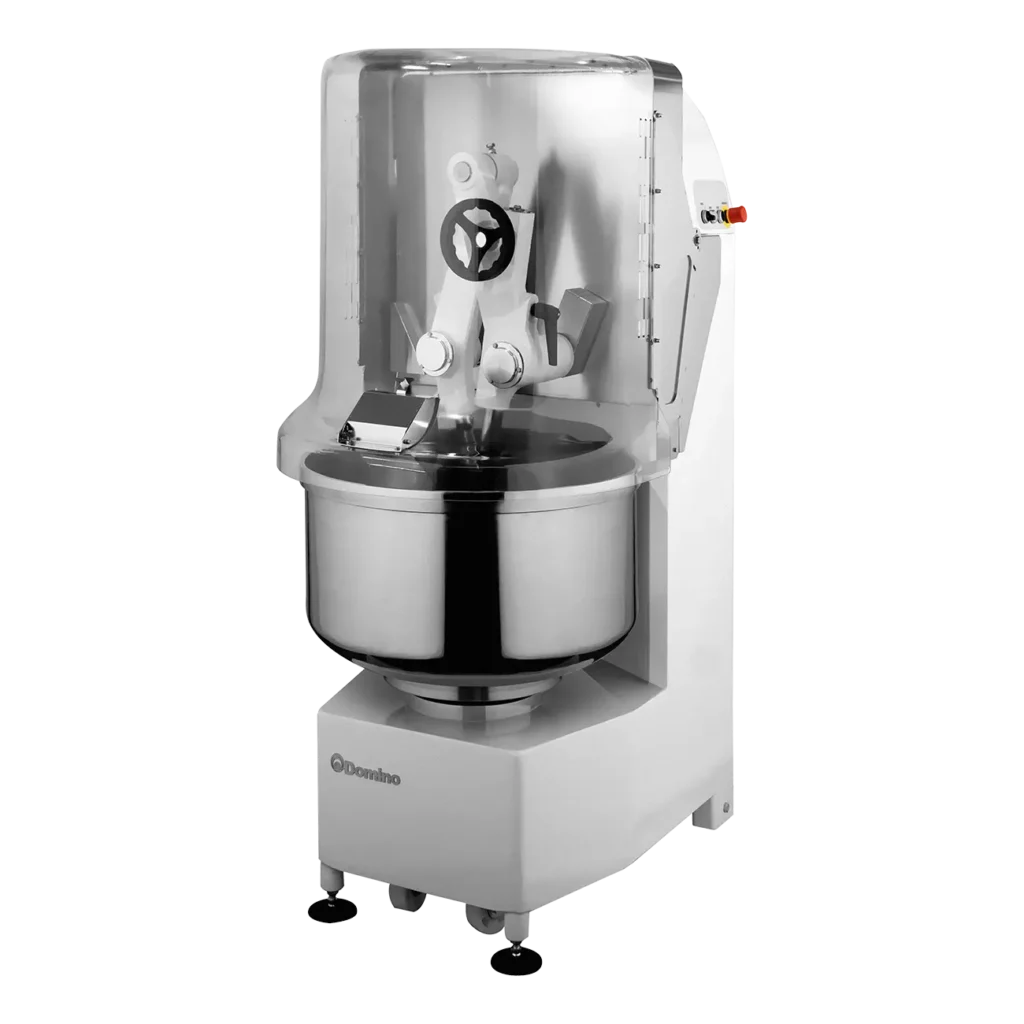
Double arm mixers
TUFF Hydro: the perfect dough processing of large leavened goods
In addition to the yeast, dough processing is a crucial step in the production of large yeast products. Dough mixers with plunging arms, such as the TUFF Hydro, are the ideal choice for obtaining soft, elastic and well-oxygenated dough.
Thanks to the gentle movement of the plunging arms, the dough is processed without overheating, preserving organoleptic properties and ensuring optimal leavening. The TUFF Hydro can also handle high hydrations, up to 120 percent, a key feature for large leavened goods, known for their rich butter and liquid content.
In addition to technical precision, the TUFF Hydro offers practical advantages: ease of use, robust materials, and quiet operation make it a versatile and reliable tool for laboratories of all sizes.
Technology and tradition: a winning combination
The production of great leavened goods represents a perfect balance between tradition and innovation. On the one hand, the enhancement of natural yeast and artisanal techniques; on the other, the support of machinery such as MAMA and TUFF Hydro, which allow excellent results to be achieved with greater efficiency and safety.
For any artisan of the white art, investing in high-quality tools means being able to offer their customers unique products that encapsulate all the passion and expertise that distinguishes Made in Italy. Great leavened goods are not simply cakes: they are masterpieces that tell stories of tradition, innovation and a love of excellence.